

Sunny days – and feeling the warm sun on your face – are one of life’s simple joys. So it’s a cruel twist that the sun is also one of the biggest contributors to visible skin aging.
But even when being diligent about sunscreen, sunspots on the face are (sadly) often an inevitable part of aging.
However,the good news is that sunspots are highly treatable. Between lasers, skincare, and other professional treatments, it’s possible to not only lighten sunspots, but in many cases to remove them entirely and restore an even skin tone.
At BodyTonic Cleveland, we start every consultation with a VISIA® Skin Analysis so we can see exactly what’s happening beneath the surface. Sunspots aren’t always just surface-level pigment, and Visia helps us pinpoint the best treatments for your skin – not just in the moment, but long-term too.
Here’s what you need to know about treating sunspots on the face and how to get them under control for good.
What are sunspots on the face?
Sunspots (also called age spots, liver spots, or solar lentigines) are small, flat, brownish patches that form on the skin after years of sun exposure. They’re a type of hyperpigmentation, which simply means your skin has produced more melanin than usual in certain areas in response to UV light.
Because they develop slowly over time (and under the skin), most people don’t notice them until their late 30s or 40s. And they almost always show up in the same sun-exposed spots: the cheeks, forehead, nose, upper lip, hands, and chest.
Sunspots are completely harmless and not a medical concern, but they won’t fade on their own. In fact, they often get darker with repeated sun exposure or hormonal shifts, which is why many people choose to treat them.
While sunspots are usually easy to identify, they can look similar to other types of hyperpigmentation, like melasma, freckles, or post-inflammatory marks. And in rare cases, something that looks like a sunspot could be something more serious.
This is why it’s always a good idea to have any spots or skin changes looked at properly, and why we always use VISIA® Skin Analysis at BodyTonic – it helps us see exactly what’s happening under the surface, so we can be sure to treat the right issue with the right approach.
How do you remove sunspots on the face?
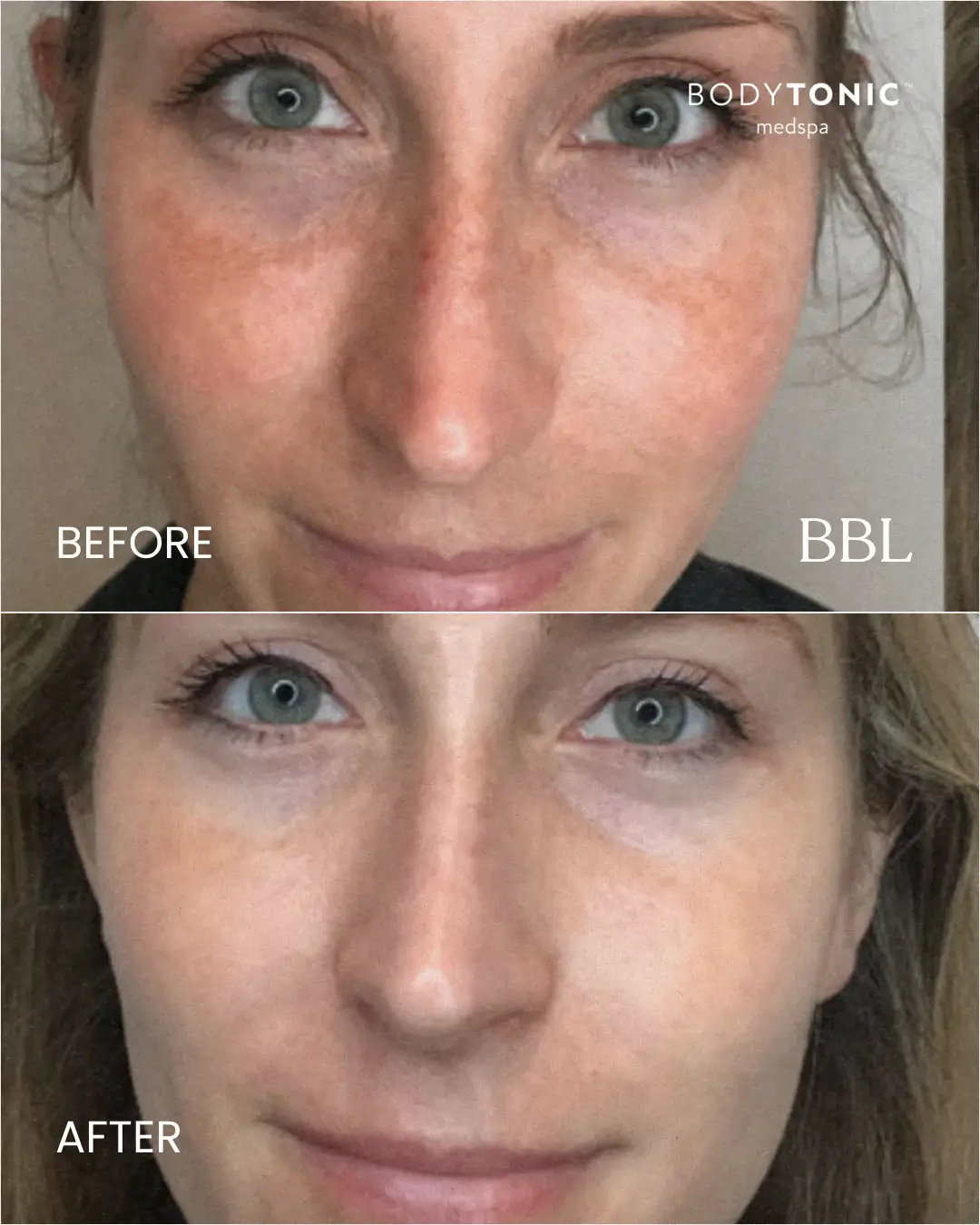
There’s no single “best” treatment for sunspot removal.
There are several different treatments that can help, and often a combination of treatments (plus a quality skincare routine) is the best approach.
Deciding on the right approach depends on:
- How deep the pigment sits
- How many spots you have
- Whether the spots are clustered or scattered
- Your skin type and tone
- Whether you have other concerns (texture, wrinkles, pores)
This is where Visia Skin Analysis comes in.
Visia doesn’t just photograph your skin – it looks beneath the surface to reveal the pigment you can’t see yet, tracks changes over time, and helps us build a personalized, strategic treatment plan.
A Visia scan measures:
- Visible and hidden sun damage
- The depth of pigmentation
- Pore size and texture
- Redness and vascular concerns
- Wrinkle patterns and skin laxity
It’s the most accurate way to identify the health and condition of your skin, and decide on the best approach to get an even skin tone back – whether that’s from laser treatments, peels, microneedling, skincare, or a multi-treatment approach.
The best treatments for removing sunspots on the face
Once we know what’s happening beneath the surface of your skin, we can tailor a personalized plan to tackle your sunspots. This will usually involve using one or more of the treatments below.
Laser for sunspots on the face
Laser is often the most effective way to treat sunspots because it targets pigment directly. Laser light breaks up excess melanin so the body can naturally clear it away, leading to a more even-looking complexion.
Laser skin resurfacing treatments are especially helpful for:
- Stubborn, well-defined sunspots
- Deeper pigmentation
- Sun-damaged texture
- Uneven tone that hasn’t responded to skincare
Depending on your skin, there are different lasers that might be most suitable – from BBL and MOXI for brightening discoloration and targeting early sun damage, to CoolPeel CO2 laser for deeper resurfacing to tackle more stubborn spots and texture changes.
Microneedling for discoloration and texture
Microneedling doesn’t remove sunspots the way laser does, but it’s excellent for brightening, evening out tone, and improving overall skin quality.
It helps by stimulating fresh collagen and elastin, encouraging pigment turnover, and reducing mottled or rough texture common with sun damage.
Microneedling is especially helpful when sunspots appear alongside enlarged pores, uneven texture, acne scarring, and fine lines, as it can address all these concerns at the same time.
Again, depending on your skin, we might recommend SkinPen microneedling or the more advanced RF microneedling as part of your plan.
Chemical peels to lighten sunspots on the face
Chemical peels help remove damaged surface cells and lighten excess pigment. They’re a great option if your sunspots are mostly superficial or if you want overall brightening rather than spot-only treatment.
Peels also improve dullness, unevenness, rough texture, and early signs of aging.
The importance of skincare for getting rid of sunspots on the face
If you want to get rid of sunspots completely – and for the long-term – quality and consistent skincare is a must.
While the best skincare products can help lighten discoloration on their own, once a sunspot is dark enough to be visible, the best results for removing it usually come from lasers and the other treatments mentioned above.
However, good skincare can make a big difference in lightening sunspots on the face, and especially in preventing them from worsening or new ones from developing.
- Vitamin C – which brightens and protects
- Retinoids – which speed up cell turnover
- Pigment inhibitors like azelaic acid, kojic acid, and niacinamide
- SPF 30–50 – essential for preventing new sunspots
And yes – medical-grade products (such as SkinBetter Science, iS Clinical, and Neocutis) do make a difference in both strength and consistency of results.
If you’re unsure where to start, come and see us. We’ll always include skincare guidance and recommendations as part of our consultation, and are licensed providers of the ranges we consider best in the market.
Can you remove sunspots on the face permanently?
We’re happy to say sunspots are a very treatable concern, and you can expect excellent results from the right treatment plan.
But it’s important to realize – removing existing sunspots doesn’t mean new ones won’t form. Which is why maintenance matters.
Lasers and skincare are generally the most effective combination for removing and preventing sunspots. But peels, microneedling, and other med spa treatments can all play a key role in rejuvenating the skin and maintaining long-term results.
Plus, when you visit a med spa like BodyTonic, you benefit from Visia Skin Analysis tracking, which shows measurable improvement over time and ensures the right and best treatments for your skin are being chosen.
Think of it as treating the skin concerns you have now and preventing the ones you’d otherwise develop later.
Ready to treat sunspots on your face? Start with a Visia Skin Analysis at BodyTonic.
Sunspots can be stubborn, and treating them often requires more than one product or treatment. With Visia Skin Analysis, we can see exactly what’s happening – both on the surface and underneath – and design a personalized plan that actually works for restoring an even, blemish-free complexion.
Whether you need laser, microneedling, chemical peels, medical-grade skincare, or a combination, we’ll guide you every step of the way and track your progress so you can see your skin improving. Book your consultation at BodyTonic Cleveland today, and take the first step toward clearer, brighter, more even-looking skin.