

On the face of it, everyone knows what freckles are. They’re the charming speckles of color that many people have across their face, and often other parts of their body too.
However, while we might all know what freckles are in theory, it’s not always as clear where they come from, what causes them, and – more importantly – how to tell the difference between freckles vs sun or age spots, and whether you need to do anything about them.
This is why freckles are actually one of the most commonly queried skin concerns… Questions like Are freckles sun spots?, Do freckles get darker in the sun?, Do freckles disappear with age?, and How can you tell the difference between freckles and sunspots in the first place? are all extremely common – and ones we’ll clarify for you here.
Because while freckles and age spots can look similar at a glance, they’re not the same thing. They develop for different reasons, behave differently over time, and can mean different things for your skin.
But the good news is that in most cases, they’re purely aesthetic – and there are effective ways to address them if you don’t like how they look.
What are freckles?
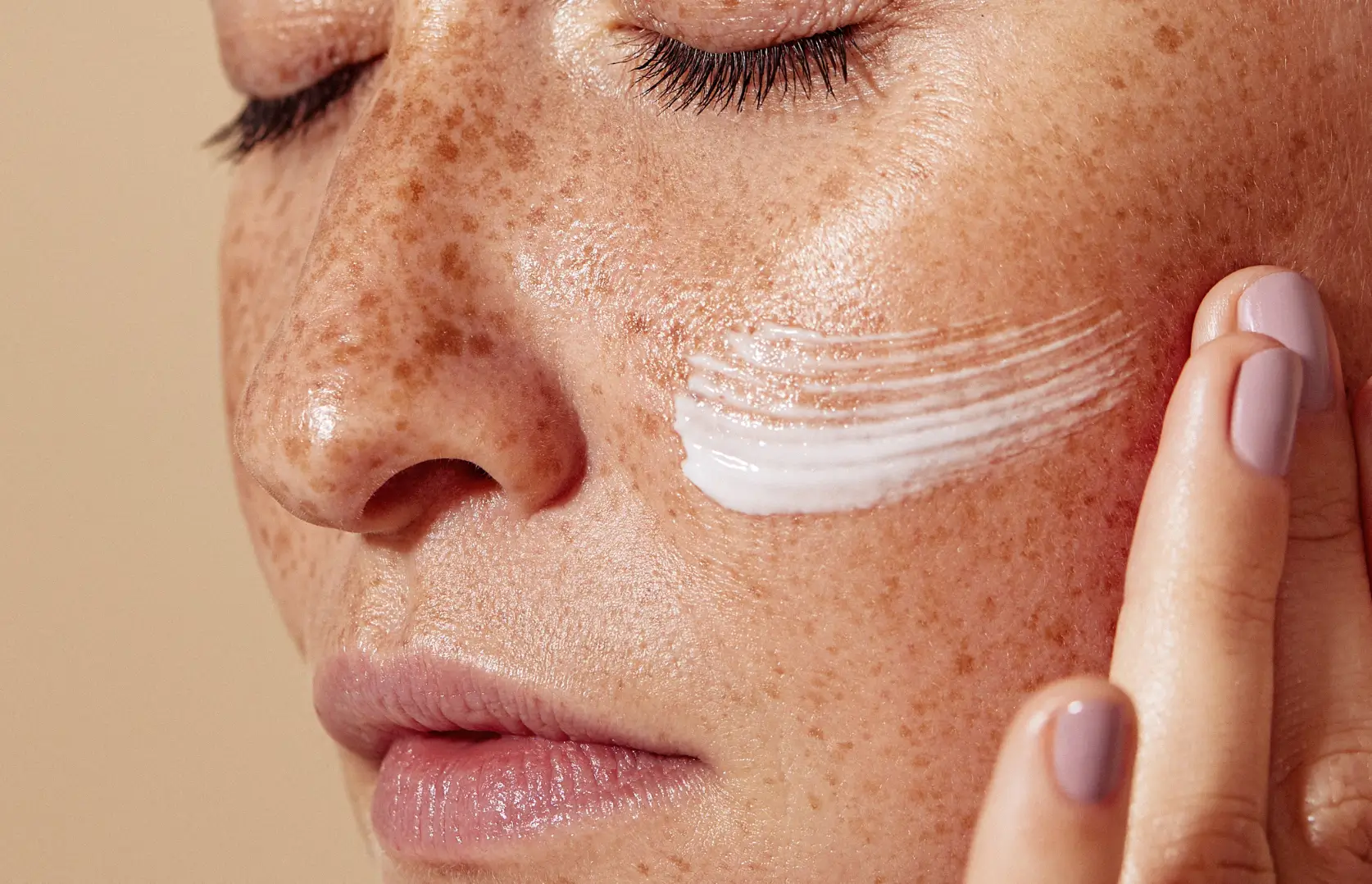
Freckles (known medically as ephelides) are small, flat pigmented spots on the skin that range in color from pinky-red to brown.
They’re extremely common – especially in people with fair skin, red or light hair, or a family history of freckling – and usually first appear during childhood, and often gradually fade with age.
They develop due to a combination of genetics and sun exposure, and normally appear on body areas that are exposed to the sun, especially the face, arms, and upper chest. And importantly, they aren’t a health threat.
But freckles do exist on a spectrum.
Some people have light, seasonal freckles that appear in summer and fade in winter. Others – particularly those with very fair skin – may have dense, lifelong freckling that remains visible year-round.
As key pointers that identify them, freckles typically:
- Are small and flat
- Are reddish in fairer skin, and brown in darker skin tones
- First appear in childhood or adolescence (though not always)
- Become darker with sun exposure
- May lighten in winter
- Are completely benign
It’s important to realize that freckles themselves are not sun damage. They’re a genetic pigment response to UV exposure. However, they do indicate that your skin is sensitive to the sun.
Do freckles get darker in the sun?
Yes – this is one of the defining characteristics of true freckles.
When your skin is exposed to UV light, melanocytes increase melanin production as a protective response. In people prone to freckling, that melanin becomes concentrated in small areas, making freckles appear darker.
This is why freckles often become more noticeable in summer months and may lighten when sun exposure decreases.
That seasonal shift is a key clue in distinguishing freckles vs age spots.
Do freckles disappear with age?
Sometimes – but not always.
In many people, freckles fade gradually over time as melanocyte activity slows with age. However, in individuals with strong genetic freckling (especially very fair skin types), freckles may remain prominent throughout adulthood.
It’s important not to oversimplify this: freckles don’t follow one single pattern. Their behavior depends largely on genetics and sun exposure history.
What are age spots?
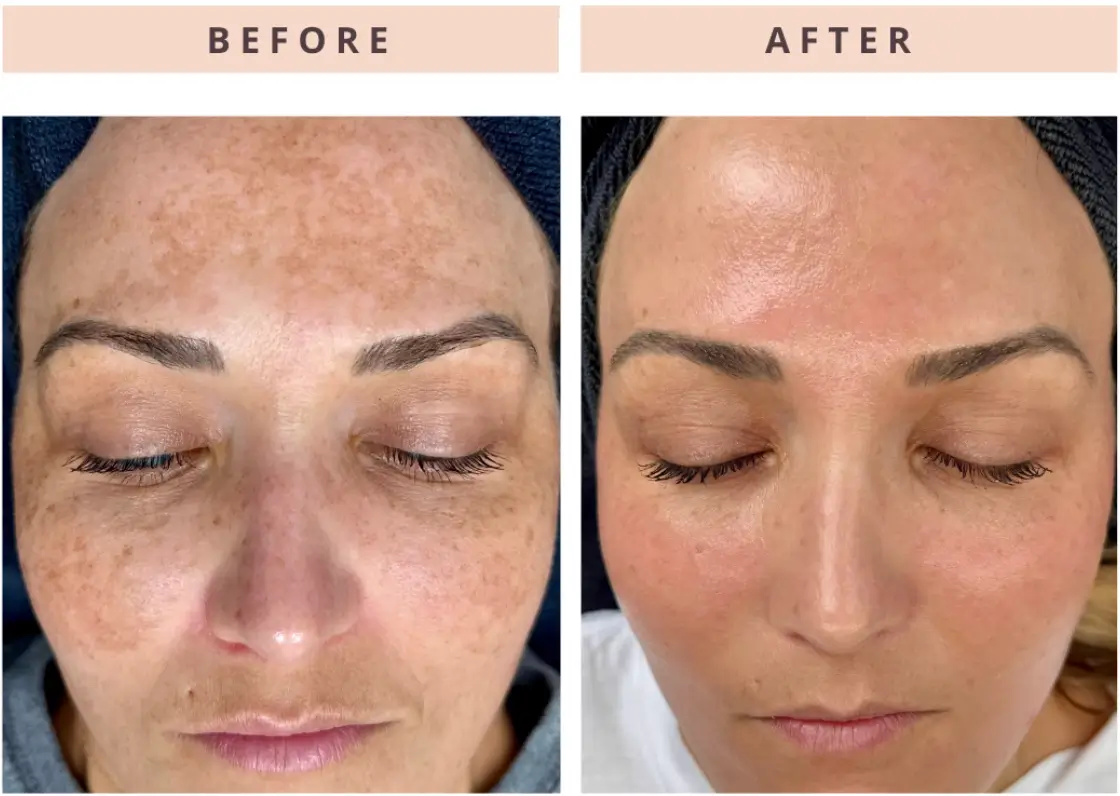
Age spots – also known as sun spots or solar lentigines – are flat, brown patches that develop due to cumulative UV exposure over many years.
Unlike freckles, which are primarily genetic and brought out by sun exposure, sun/age spots are directly linked to long-term sun damage.
Age/sun spots typically:
- Start to appear in adulthood (usually around the 40s)
- Develop gradually in sun-exposed areas (face, cheeks, forehead, hands, chest)
- Are larger and more defined than freckles
- Do not fade seasonally
- Persist without treatment
At a cellular level, age spots involve an increase in the number of melanocytes – not just increased melanin production.
They’re harmless and not medically dangerous, but they are considered a visible sign of photoaging.
Are freckles sun spots?
No – but this is one of the most common areas of confusion.
True freckles (ephelides) are not the same as sun spots (solar lentigines).
However, many people use the word “freckles” to describe any small brown mark on the face. This is why the terms often get used interchangeably in everyday conversation.
The key difference between freckles and sun spots:
- Freckles are a genetic pigment response triggered by sun.
- Sun spots are caused by cumulative UV damage over time.
Both involve pigment. But they develop for different reasons and behave differently.
Difference between freckles and sunspots: key differences at a glance
Here’s a simplified comparison to help clarify:
| Feature | Freckles (Ephelides) | Age Spots / Sun Spots (Solar Lentigines) |
Primary cause | Genetics + UV trigger | Cumulative UV exposure |
| Typical onset | Childhood | Adulthood |
| Seasonal change | Darken in sun, lighten in winter | No seasonal fading |
| Size | Small | Larger, more defined edges |
| What they indicate | Genetics + UV-sensitive skin | Long-term sun exposure |
Essentially – if your spots change with the seasons, they’re more likely freckles. If they remain stable year-round and appeared later in life, they’re more likely age spots.
Sun damage vs freckles – what’s the real difference?
Freckles alone are not a sign of skin damage – they’re a genetic pigment response to UV exposure.
Age spots, on the other hand, are a marker of cumulative sun exposure, and are considered a visible sign of photoaging.
That said, freckles and sun damage can absolutely coexist. In fact, people with heavy freckling often have UV-sensitive skin, meaning they may be more prone to developing sun-related pigmentation over time.
But the key difference lies in why the pigment formed:
- Freckles form because your skin is genetically programmed to respond strongly to UV.
- Age spots form because years of UV exposure has gradually altered pigment cells.
Understanding this difference helps guide both prevention and treatment decisions for your skin.
When should you have freckles or age spots checked?
Freckles and age spots are typically harmless.
However, any spot or discoloration on your skin that:
- Changes in shape or color
- Develops irregular borders
- Grows rapidly
- Bleeds or becomes raised
Should be evaluated by a medical professional.
When in doubt, it’s always better to have your skin assessed properly rather than assume.
At BodyTonic Cleveland, we begin all our consultations with VISIA® Skin Analysis. This advanced imaging system allows us to see whats happening beneath the surface of your skin, helping us distinguish between surface pigmentation, deeper sun damage, and other underlying skin changes – so we can recommend the right approach with confidence.
Can freckles and age spots be treated?
Yes – though treatment goals can differ.
Freckles can often be lightened with treatments like BBL, MOXI, CoolPeel CO2 laser, or chemical peels. However, because freckles are genetically driven, they may return with sun exposure.
Age spots, on the other hand, often respond extremely well to targeted laser treatments that break up excess pigment and allow the body to clear it naturally.
Depending on your skin, we may recommend:
- BBL or MOXI for early sun damage and brightening
- CoolPeel CO2 laser for deeper resurfacing
- Chemical peels for surface pigment
- Medical-grade skincare with vitamin C, retinoids, and pigment inhibitors
- A multi-treatment approach for optimal results
As with all aesthetic treatments, the best approach for removing any kind of pigmentation on the face depends on how deep the pigment sits, how many spots you have, your skin type, and your long-term skin goals. Which is why personalized consultations are always the first step.
Find out if you’re dealing with freckles or age spots at BodyTonic Cleveland
Freckles and age spots may look similar, but they don’t behave the same way – and understanding the difference is the first step toward deciding what (if anything) you want to do about them.
Whether you’re unsure if you’re seeing freckles or sun spots, or you’re ready to lighten visible pigment, a professional assessment makes all the difference. Book your consultation at BodyTonic Cleveland and start with a VISIA® Skin Analysis – so you can understand your skin, protect it properly, and restore a brighter, more even complexion with confidence.