
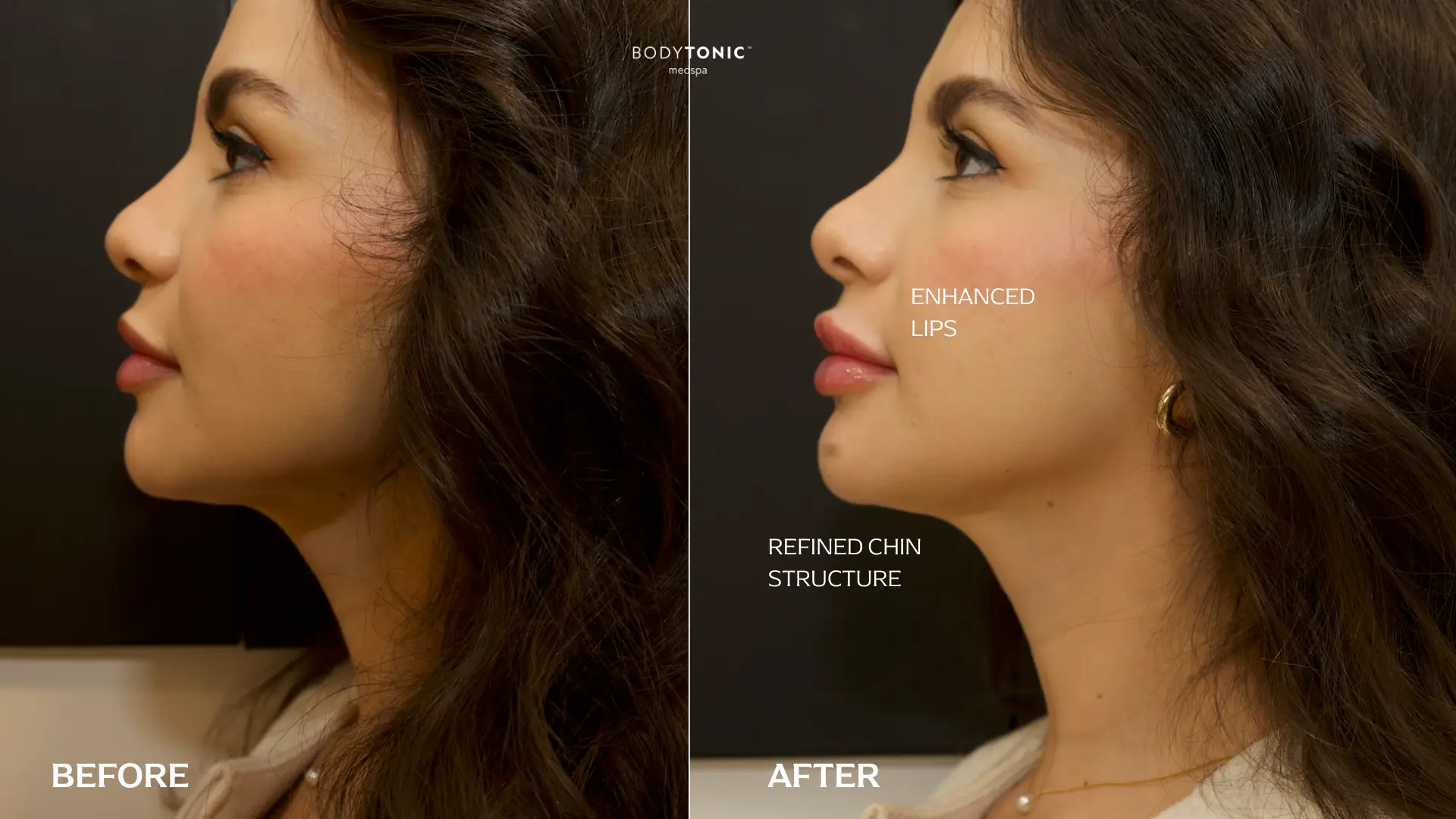
Fillers are one of the most popular cosmetic procedures for a simple reason: they allow us to enhance and adjust our features without having to undergo surgery.
It’s well-known that faces with symmetry and balanced proportions are usually perceived as the most attractive. It’s something we instinctively notice, even if we can’t quite explain why.
If you look at people consistently considered to be the most “beautiful” – Brad Pitt, Scarlett Johansson, Audrey Hepburn – they often have near-perfectly symmetrical features. And if they’re not symmetrical, they’ll almost certainly be in balance.
Of course, most of us aren’t born with these ideal proportions. It’s far more normal to have a little asymmetry – one eyebrow that sits a little higher than the other, a cupid’s bow that’s not quite even – or certain features that feel too big, or too small, for the rest of our face.
But this is where dermal fillers and other injectables can make a big difference. People often think of fillers as just giving you “bigger lips” or restoring volume in the cheeks. But they can do so much more than that. When used thoughtfully, fillers can create facial symmetry and harmony – small adjustments that suddenly bring all your features into balance, making you look the best version of yourself in the subtlest way.
Facial balancing: not new, just better understood
You might think that facial balancing is a new thing. It suddenly seems to be everywhere, especially across social media.
But actually, facial balancing isn’t new at all. Experienced injectors have been thinking this way for decades – it’s simply gained a clearer name, and more public awareness.
Rather than focusing on one feature at a time, facial balancing looks at how all of your features relate to one another. The goal isn’t to change the “one” feature you don’t like. Or to change your face beyond recognition. It’s to subtly enhance all your features by improving proportion and harmony.
A skilled injector should always be considering facial symmetry when performing any filler treatment. But not all do. Many people arrive at facial balancing after trying individual treatments – lip filler, cheek filler, jawline filler – and feeling that something still looks a little “off.” Often, that’s because the rest of the face wasn’t considered as a whole.
What is facial balancing?
Essentially, facial balancing is a treatment approach that looks at the entire face, rather than a single feature in isolation.
The aim is to improve:
- proportion
- symmetry
- flow between features
That might mean only addressing one specific feature, or it might mean small adjustments to a few. It can include softening visible asymmetry, adjusting how prominent certain features appear in relation to others, or subtly strengthening one area so it better supports the rest of the face.
This whole-face approach matters because enhancing one feature without considering the rest of the face can sometimes throw proportions out of alignment.
For example:
- Fuller lips can make a small or recessed chin look even smaller.
- Treating under-eye hollows directly can look heavy if the cheeks aren’t supporting the area.
- Adding volume to the cheeks without considering the jawline can make the lower face look heavier or less defined.
Facial balancing helps avoid these issues by looking at how the face works together first – before deciding where filler is actually needed.
What does facial balancing mean in practice?
Facial balancing always starts with a full facial assessment – not just straight on, but from multiple angles and in motion. This should be a standard part of any appointment that involves fillers or other injectables.
A strong understanding of facial anatomy is crucial, as achieving balance with fillers depends on knowing how underlying structure, support, and movement work together.
An experienced injector will consider:
- facial structure and proportions
- how features relate to and interact with one another
- where subtle support could improve balance
Hyaluronic acid dermal fillers are most commonly used to address facial symmetry and balance, but they’re not the only option. E.g. neuromodulators such as Botox or Dysport can help even out muscle-related asymmetries, while biostimulators like Radiesse or Sculptra may be better suited for balancing stronger features such as the chin or jawline.
One of the key principles of facial balancing is that less is often more. Small amounts of filler, placed precisely, can make a bigger difference than large volumes in obvious areas.When facial balancing is done well, the results are subtle. Most people won’t be able to tell exactly what’s changed – only that you look refreshed, balanced, and at your best.
Which areas matter most in facial balancing?
Deciding where to inject filler to achieve facial balance should always be 100% individualized. Everyone’s face is different, and everyone has different goals.
In practice, facial balancing often involves a combination of softening visible asymmetry and adjusting proportions so features sit more comfortably together.
That said, a few core areas tend to have the biggest impact on overall facial balance:
- Chin: The chin plays a bigger role in facial balance than many people realise. A small or recessed chin can make the nose appear larger, the lips look fuller than intended, or the lower face feel undefined. A slight adjustment here can bring the whole face back into proportion.
- Cheeks (midface): The cheeks provide support to the face and help frame the eyes. Supporting this area can improve balance and even lift the under-eye area, often without treating that delicate area directly.
- Jawline: The jawline anchors the lower face. Improving definition or balance here can help the face feel more structured and proportionate.
- Temples: Volume loss in the temples is common with age and can affect overall facial harmony. Subtle support in this area can help rebalance the upper and lower face.
- Lips: Lip asymmetry is extremely common. In facial balancing, lip filler is usually used conservatively – to even out shape and proportion, not to overpower the rest of the face.
Are fillers for facial symmetry right for you?
Using dermal fillers for facial symmetry and balancing is an amazingly effective treatment that’s suitable for most people. Because asymmetry is so common, balancing proportions often has a bigger impact than people expect.
Fillers may be a good option if you:
- notice facial asymmetry or features that feel out of proportion
- have had filler before but didn’t quite love the result
- want subtle, natural-looking enhancement rather than dramatic change
- prefer a minimally invasive approach
A consultation is essential. This allows for an honest discussion about what’s contributing to your imbalance – and what will realistically help.
Fillers for facial balancing at BodyTonic
At BodyTonic Cleveland, our injectors take your entire face into account with every injectable treatment. We truly understand facial anatomy, and facial symmetry and proportion are always part of the plan – whether you’re having filler for the first time or refining previous work.
Our focus is always on achieving balance and natural-looking results that still look like you.
If fillers for facial balancing is something you’ve been thinking about, a personalized consultation can help you understand your options and decide whether injectables are your best next step. Book a consultation at BodyTonic Cleveland and explore fillers for facial symmetry with expert, honest guidance.