
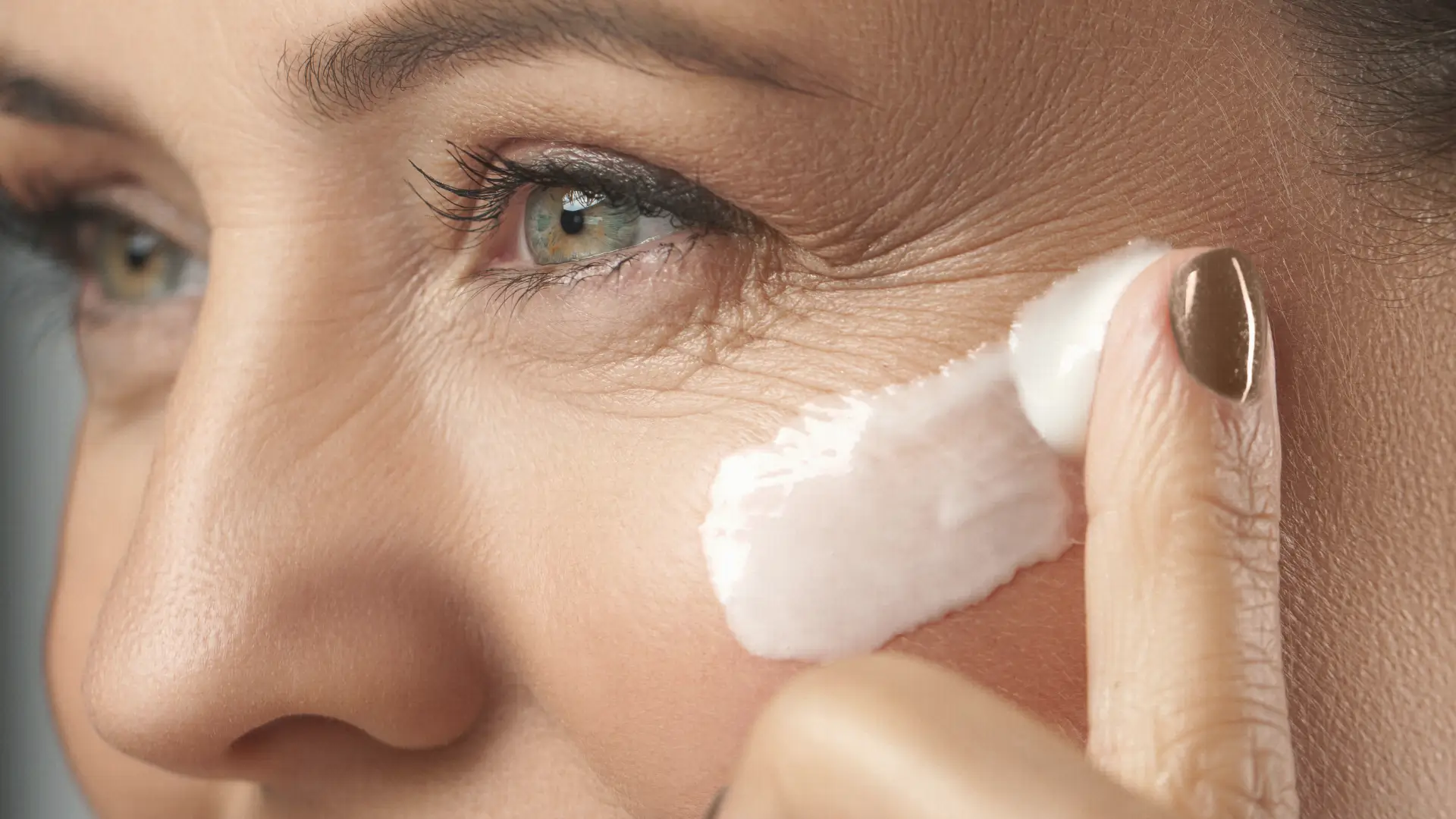
If you’re trying to improve the appearance of your under-eye area and are weighing up whether to spend $100+ on a high-end eye cream or explore a clinical treatment like under-eye filler, you’re not alone. And you’re not wrong to pause before spending money on either.
Skincare brands often make big promises about what their products can do. But can an eye cream really fix hollows?
The short answer is no. But they can still help in other important ways.
Understanding what’s really causing your under-eye hollows is the most important starting point. There are many different changes that happen to our skin and facial structure as we age, and many people don’t realize just how interconnected they all are.
Sometimes, addressing a separate issue – like your overall skin health, hydration, or dark circles – can have a noticeable impact on the appearance of your under-eye hollows. Other times, addressing the hollows themselves is the key.
Once you understand what’s going on, it becomes much easier to choose the right solution – and ensure you’re spending money on the things that will actually deliver the result you’re hoping for.
What causes under-eye hollows?
Under-eye hollows are completely normal. Everyone has them to some degree – it’s part of natural facial anatomy. However, they typically become more noticeable with age, due to volume loss.
As we get older, we gradually lose fat, collagen, and structural support in the under-eye and mid-face area. Fat pads reduce or shift, collagen production slows, and even bone density can subtly change over time – all of which leads to a loss of volume under the eyes, and a more noticeable hollowed appearance.
At the same time, the skin under the eyes – which is already some of the thinnest on the body – also becomes even thinner and more delicate with age. This makes shadows, blood vessels, and volume loss underneath even more visible, which in turn can make existing under-eye hollows appear even darker or more pronounced.
Several other factors can influence how noticeable under-eye hollows become, including:
- Genetics and facial structure – some people naturally have deeper-set eyes or less under-eye fat, making hollows more visible even at a younger age.
- Dehydration – when the skin is dehydrated, it looks less plump and can exaggerate hollowing.
- Fatigue and stress – lack of sleep and ongoing stress can make the under-eye area look duller and more sunken.
- Weight loss – significant or rapid weight loss often reduces facial fat, including under the eyes.
- Lifestyle factors – smoking, excess alcohol, and sun exposure all accelerate collagen breakdown.
- Allergies and sinus congestion – chronic inflammation or congestion can create darker shadowing under the eyes.
Understanding these underlying causes is important, because it explains why under-eye hollows aren’t just a “skin problem”. They’re the result of structure, skin quality, and lifestyle factors working together – which is why topical skincare has limits when it comes to actually filling or correcting hollows.
Mild hollows vs deep hollows
The depth of your under-eye hollows also plays a big role in determining the best approach to treating them.
Mild hollows tend to be shallow and subtle. They often look worse when you’re dehydrated, tired, or run down, and may be accompanied by dark circles caused by thin skin. In these cases, improving skin quality, hydration, and overall under-eye care can soften their appearance.
Deep hollows, on the other hand, are structural. They’re usually present regardless of sleep, hydration, or skincare routine and create more pronounced shadowing. In these cases, creams won’t meaningfully change the shape of the under-eye area – because the issue isn’t happening at skin level.
Understanding which type you’re dealing with makes choosing the right approach much clearer.
How hollows affect dark circles & eye bags
Another important thing to understand is that dark circles and eye bags are very much linked to under-eye hollows.
When volume is lost under the eyes, the hollow changes how light hits the area. This creates shadowing, contrast, and uneven transitions between the under-eye and cheek – all of which can make the area look darker, puffier, or more tired than it actually is.
Dark circles, for example, are often blamed on fatigue or genetics. And while those factors can play a role, in many cases the darkness is actually caused by shadowing from a hollow combined with thin under-eye skin. Treating the volume loss can reduce that shadowing, which is why dark circles often improve after under-eye filler.
Under-eye bags are similar. They can be caused by fluid retention, fat pads, or skin laxity, but when they’re present alongside a hollow, the contrast can make the bag look more prominent. In the right candidates, restoring volume in the tear trough can smooth that transition and soften the appearance of bags.
This is why under-eye hollows often sit at the center of multiple concerns. When the hollow is addressed properly, dark circles and eye bags frequently improve as well – even though they weren’t treated directly.
So, can eye creams help fix hollows?
Eye creams cannot replace lost volume. No cream – no matter how expensive or well formulated – can physically fill in a hollow or restore structural support beneath the skin.
The only way to truly correct under-eye hollows is by restoring lost volume, and the best way to do that is with under-eye fillers.
However, that doesn’t mean eye creams are pointless.
What eye creams can do is improve the quality of the skin under the eyes. Well-hydrated skin looks smoother, plumper, and more resilient, which can help reduce fine lines and soften the appearance of mild hollows, and make the area look brighter and healthier overall.
So what does this mean in practical terms? That fillers are the best way to fix hollows themselves, while eye creams are best viewed as supportive care.
Under-eye fillers: the most effective way to fix hollows
Under-eye fillers work because they address the root cause of hollows: volume loss.
Because the under-eye area is so delicate, the approach is different from other types of filler. Treatments use a much smaller amount of product, placed very precisely, and often a softer or more diluted formulation designed specifically for this area.
Using a hyaluronic acid–based filler, volume is carefully restored beneath the skin to support the under-eye area and smooth the transition between the under-eye and cheek. Rather than “filling” the hollow in an obvious way, the goal is to gently recreate the natural support that’s been lost over time.
This has a few important effects:
- It reduces shadowing that makes the under-eye area look dark or tired.
- It softens the hollowed appearance without adding bulk.
- And in some cases, it can make under-eye bags look less prominent by improving overall contour.
For a more detailed explanation of the treatment, you can read our dedicated guide to under-eye filler.
How eye creams can still help, and the ingredients to look for
While eye creams won’t reverse deep hollows or replace lost volume, they can still play an important supporting role by improving skin quality, hydration, and overall brightness under the eyes, which can make hollows appear less pronounced.
Key ingredients to look for include:
- Peptides – support collagen and help strengthen thin under-eye skin.
- Hyaluronic acid – boosts hydration, smoothness, and temporary plumping.
- Low-strength retinol – helps improve fine lines and skin quality over time (used carefully).
- Niacinamide – supports the skin barrier and brightness.
- Vitamin C – improves skin quality and light reflection.
- Caffeine – helps reduce puffiness and fluid retention.
- Anti-inflammatory extracts (such as green tea) – calm swelling.
It’s also important to choose quality brands. While the price point of over-the-counter brands may be appealing, they often don’t contain enough active ingredients to make a meaningful difference. Medical-grade products such as SkinBetter Science, iS Clinical, or Neocutis are scientifically proven to work on specific concerns, meaning they are ultimately a far better investment of your money. Even so – remember that skincare works gradually and is more subtle in its results. However, consistent use can make a noticeable difference over time – particularly in slowing further signs of aging and improving the overall health and appearance of the under-eye area.
The importance of healthy lifestyle factors for your skin
Finally, don’t forget the role lifestyle factors play.
Just like eye creams, changing a few daily habits won’t suddenly fill in your under-eye hollows – but their impact is often underestimated.
The usual “golden rules” of good skincare apply, and they often make a bigger difference under the eyes than people expect:
- Staying well hydrated.
- Getting consistent, good-quality sleep.
- Avoiding smoking and excess alcohol.
- Wearing sunglasses and SPF daily.
- Managing allergies and sinus congestion.
These habits won’t replace the need for targeted treatments, but they do help protect thin under-eye skin and preserve both skincare and in-clinic results over time.
Tailored advice on how to fix your under-eye hollows at BodyTonic Cleveland
As we’ve explained above, there isn’t a one-size-fits-all answer when it comes to under-eye hollows, which is why personalized assessments are so important.
At BodyTonic, we focus on understanding what’s really causing your under-eye concern before recommending anything – so you can feel confident you’re investing in the right solutions for your face and your goals.
If you’d like expert guidance on whether eye cream, under-eye fillers, or a combination approach is right for you, come and see us for an in-depth personalised consultation at BodyTonic Cleveland.