It might be something that’s bothered you for years, or it might be something you’ve recently noticed for the first time. But if you’re conscious that one eye looks smaller than the other, don’t worry – it’s not as unusual as you might think!
In fact, almost everyone has some degree of facial or eye asymmetry. There are several reasons behind these differences, with the most common being natural facial structure and aging.
While most differences are subtle, our eyes are one of the features we tend to notice and focus on most – which means even small differences can feel far more significant than they actually are.
If you’re concerned about one eye looking bigger than the other, the good news is that in most cases it’s completely normal and nothing to worry about. And depending on what’s causing the asymmetry, treatments such as Botox, fillers, and PDO threads can all help improve balance and create a more symmetrical appearance.
Understanding eye asymmetry
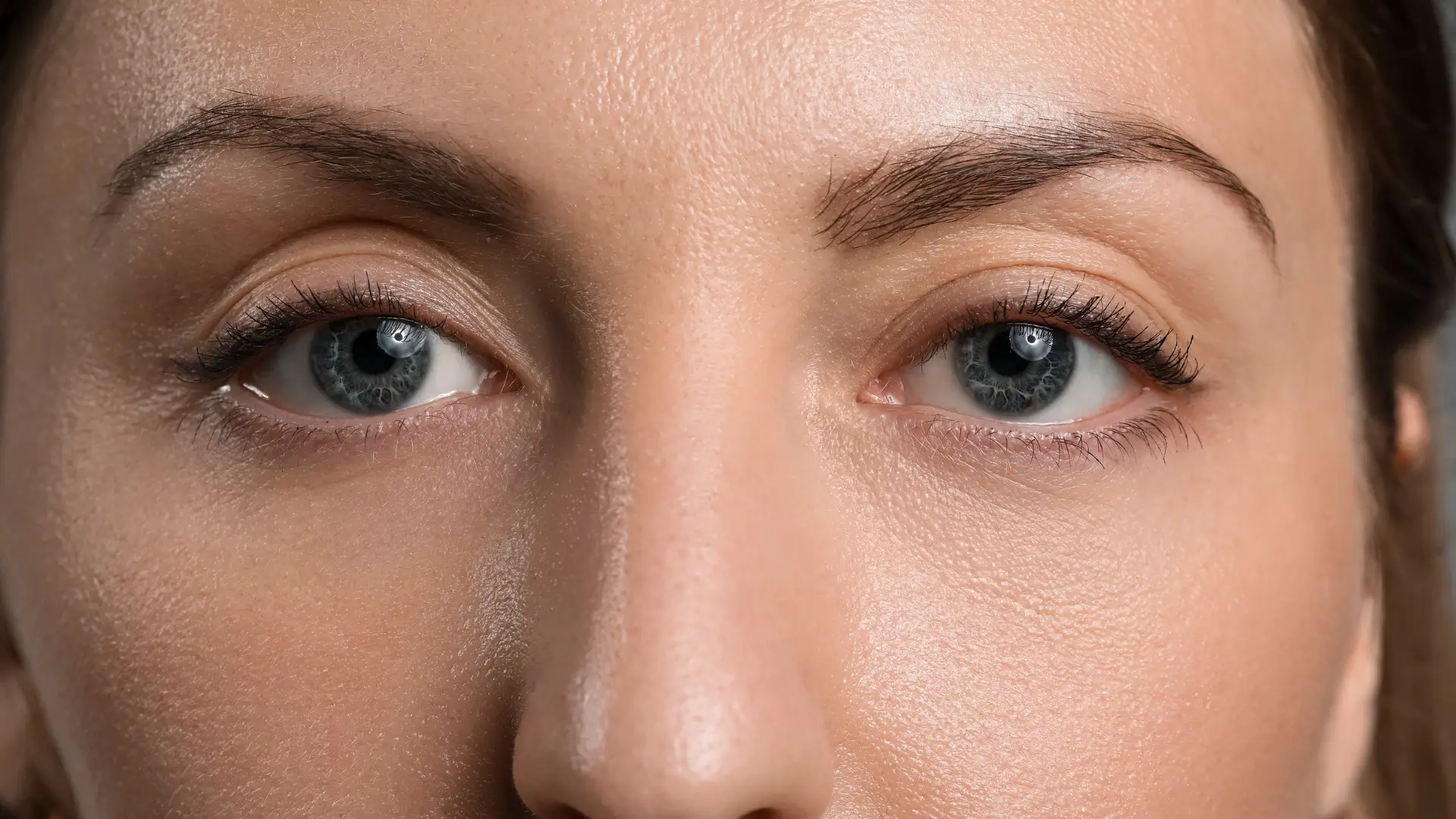
The first thing to understand is that when one eye appears bigger than the other, it’s not the eyeball itself that is different in size; it’s the subtle variations in the skin, bone structure, and features around the eyes.
The eye area is influenced by many surrounding structures – the eyelids, eyebrows, cheeks, temples, and soft tissue around the eyes.
A small difference or imbalance in any of these areas can create the impression that one eye is larger, smaller, higher, lower, or more open than the other.
So while it may feel like the eye itself is noticeably different in size, it almost certainly isn’t.
Understanding facial asymmetry and facial balance is a core part of medical aesthetics, and most Botox and filler treatments will actively aim to address facial and eye asymmetries as part of the overall treatment goal.
Why does one eye look smaller than the other?
There are several reasons why one eye may appear smaller than the other – whether it’s always been the case or something you’ve only recently begun to notice.
Natural facial asymmetry
The most common explanation is also the simplest: no face is perfectly symmetrical.
Just as one eyebrow may sit slightly higher or one cheek may be a little fuller, the structures around the eyes can naturally differ from one side to the other. Many people have had these differences their entire lives and only become aware of them after seeing a close-up photograph, video, or reflection.
Changes that come with aging
Aging is one of the most common reasons people begin to notice asymmetry.
Over time, we gradually lose collagen, elastin, and facial volume – and these changes rarely happen evenly on both sides of the face. Fat pads beneath the skin can also shift and descend at different rates, altering the support structure around the eyes. The temples may hollow differently, one cheek might provide slightly less lift than the other, and the skin around one eye can become heavier or looser.
As a result, an asymmetry that was once barely noticeable can suddenly seem much more obvious.
Differences in facial movement
Not all asymmetry is structural. The muscles responsible for facial expression aren’t perfectly balanced either, and one side of the face may move more strongly, lift higher, or contract differently than the other.
Over time, these movement patterns can become more pronounced. And just as repeated facial expressions contribute to lines and wrinkles, they can also create subtle differences in how the face moves and rests.
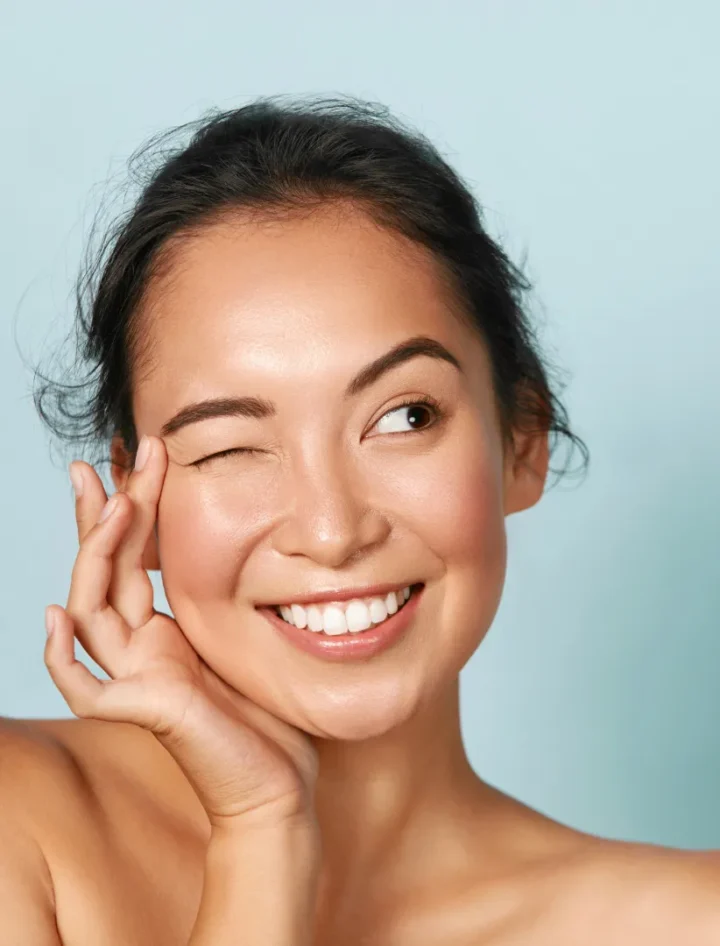
Why does one eye look smaller when I smile?
An especially common observation is that one eye appears smaller than the other specifically when smiling. This is almost always due to subtle differences in muscle movement rather than anything structural – and it’s worth knowing that this type of asymmetry is often one of the most straightforward to address with treatments like Botox or Dysport.
When should you see a doctor?
Most cases of eye asymmetry are completely harmless, especially if the difference has been present for a long time, or gradually become more noticeable.
However, sudden or significant changes can occasionally be a symptom of other causes, so you should seek medical attention if:
- The asymmetry appears suddenly.
- One eyelid begins drooping unexpectedly.
- You notice changes in vision.
- The asymmetry is accompanied by facial weakness, numbness, or pain.
- Significant swelling develops around the eye.
While these situations are very uncommon, it’s always important to rule out any underlying medical cause before considering cosmetic treatment.
Can eye asymmetry be corrected without surgery?
In many cases, yes – treatments like Botox, fillers, and PDO thread lifts can make a big difference – and often much more effectively than people expect.
One of the biggest misconceptions about treating eye asymmetry is that the eye area itself needs treatment. But as explained above, because the eyes are shaped by everything around them – brows, temples, cheeks, and soft tissue – it isn’t simply a case of targeting the eye area directly; the most effective approach is always a whole-face one.
This is the principle behind facial balancing: assessing how all your facial structures work together to identify where subtle changes will have the greatest impact on overall balance.
It’s also why a deep knowledge of facial anatomy for Botox and filler treatments matters so much – and why seeing a skilled and experienced injector at a reputable medical spa is so important.
However, it’s important to note that non-surgical treatments work best for mild to moderate asymmetry. If the difference is more pronounced, or primarily related to underlying anatomy, eyelid structure, or bone structure, surgical procedures such as eyelid surgery or a brow lift may be necessary for the best results. A consultation with an experienced specialist can help determine which approach is most appropriate.
What are the best medspa treatments to fix one eye looking smaller than the other?
There are several non-surgical treatments that can help improve the appearance of one eye looking smaller than the other.
The best choice depends on the main causes behind the asymmetry.
Botox and Dysport
When asymmetry is caused by muscle activity, Botox or Dysport is often the most effective option.
Small, carefully placed injections can help balance how muscles pull and move across the face, which may improve uneven brow position, one eye appearing more closed than the other, asymmetry that becomes more noticeable when smiling, and differences in how each side of the face moves during expression.
The goal isn’t to freeze movement or achieve perfect symmetry. It’s to create better balance while preserving natural expression.
Dermal fillers
If volume loss is contributing to the appearance of asymmetry, dermal fillers can help restore support and improve overall facial proportion.
Depending on what the assessment reveals, filler might be used to restore volume in the temples, support the cheeks, improve under-eye hollows, or enhance overall facial balance.
In many cases, only small amounts of filler are needed to create a visible improvement in how the eye area appears.
PDO thread lift
When mild skin laxity or uneven tissue descent is playing a role, a PDO thread lift may be considered.
PDO threads provide subtle lifting and support to targeted areas of the face, helping to improve balance without surgery. Results typically last in the region of 18 months to 2 years, and threads tend to work best when asymmetry is linked to mild sagging or uneven tissue support, rather than volume loss alone.
Combination treatments
Often, the best results come from combining treatments.
Botox to improve muscle balance alongside filler to restore lost volume is a common pairing, as is combining fillers with PDO threads where additional support is needed.
Because every face is different, treatment should always be tailored to the individual. There’s no single formula that works for everyone.
Eye asymmetry treatments at BodyTonic Cleveland
At BodyTonic Cleveland, our approach is never about chasing perfection.
The reality is that almost everyone has some degree of facial or eye asymmetry. What matters is whether it’s something that’s affecting your confidence and whether there is a safe, effective way to improve it.
During your consultation, we’ll assess not just the eye area, but your face as a whole – looking at facial anatomy, muscle movement, volume distribution, and overall balance to understand what’s contributing to the asymmetry. We’ll take time to discuss what we’re seeing, explain what we think is driving the difference, and walk you through the options before any treatment is recommended.
In many cases, subtle adjustments can make a meaningful difference. The goal is always natural-looking results that help you look refreshed, balanced, and like yourself.
If you’re concerned about one eye looking smaller than the other, a consultation is the best place to start.